
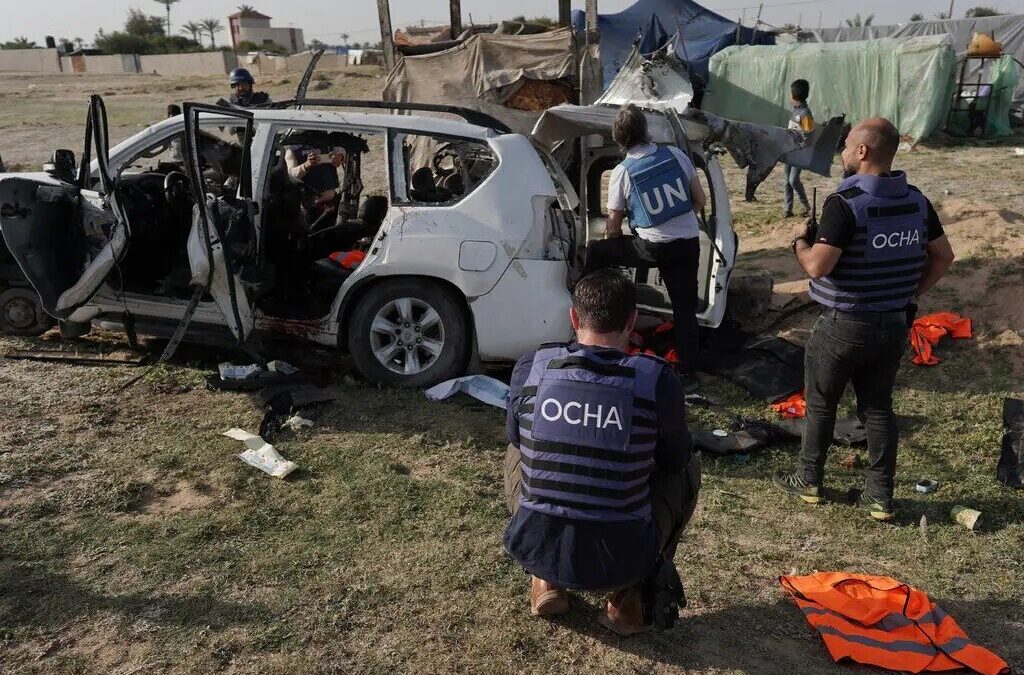
The Israeli military’s actions in Gaza could be symbolized by signs that say, “Don’t feed the Palestinians: Punishable by death.” The recent killing of seven aid workers by Israel underscores the ongoing brutality in Gaza. Israeli Defense Minister Yoav Gallant’s directive to impose a complete siege on Gaza, with no access to essentials like electricity, food, or water, highlights Israel’s intent to starve Palestinians into submission. The aid workers, employed by World Central Kitchen, were perceived as collaborators aiding the Palestinians, leading to their tragic deaths. Despite international outcry, Western leaders have historically turned a blind eye to Israel’s atrocities against Palestinians. This performative outrage is hypocritical, given their long-standing support for Israel’s oppressive policies. Despite calls for accountability, Israeli officers responsible for the aid workers’ deaths are likely to face minimal consequences, perpetuating a cycle of impunity. The political ramifications of this tragedy are evident, with growing discontent among Democratic voters over President Biden’s unwavering support for Israel’s actions in Gaza.
The narrative surrounding the killing of the aid workers reflects a broader pattern of impunity and disregard for Palestinian lives. Israeli Prime Minister Benjamin Netanyahu’s attempt to downplay the incident as a “tragic event” is disingenuous and fails to acknowledge the systematic oppression faced by Palestinians. The directive issued by Defense Minister Yoav Gallant to impose a complete siege on Gaza reveals the deliberate strategy of collective punishment employed by the Israeli government. This strategy aims to degrade the living conditions of Palestinians and undermine their resilience.
The international community’s tepid response to Israel’s actions highlights the need for greater accountability and condemnation of human rights violations. Western leaders’ complicity in Israel’s oppressive policies undermines their credibility as advocates for human rights. The selective outrage expressed by these leaders further perpetuates the cycle of violence and impunity in the region.
The tragic deaths of the aid workers serve as a stark reminder of the ongoing humanitarian crisis in Gaza, exacerbated by Israel’s blockade and military aggression. The normalization of violence against Palestinians must be challenged, and perpetrators held accountable for their actions. The demand for justice extends beyond the immediate incident to address the root causes of the conflict and pursue a just and lasting peace.
Efforts to mitigate the suffering of Palestinians must go beyond token gestures and address the structural inequalities and injustices perpetuated by the occupation. The plight of Palestinians cannot be ignored or sidelined in the pursuit of political expediency. The international community must prioritize human rights and dignity for all people, regardless of their nationality or ethnicity.
The voices of those who speak out against injustice must be amplified, and their demands for accountability heeded. The deaths of the aid workers must not be in vain but serve as a catalyst for meaningful action to end the cycle of violence and oppression in Gaza. Only through genuine solidarity and collective action can we hope to achieve a just and peaceful resolution to the Israeli-Palestinian conflict.