
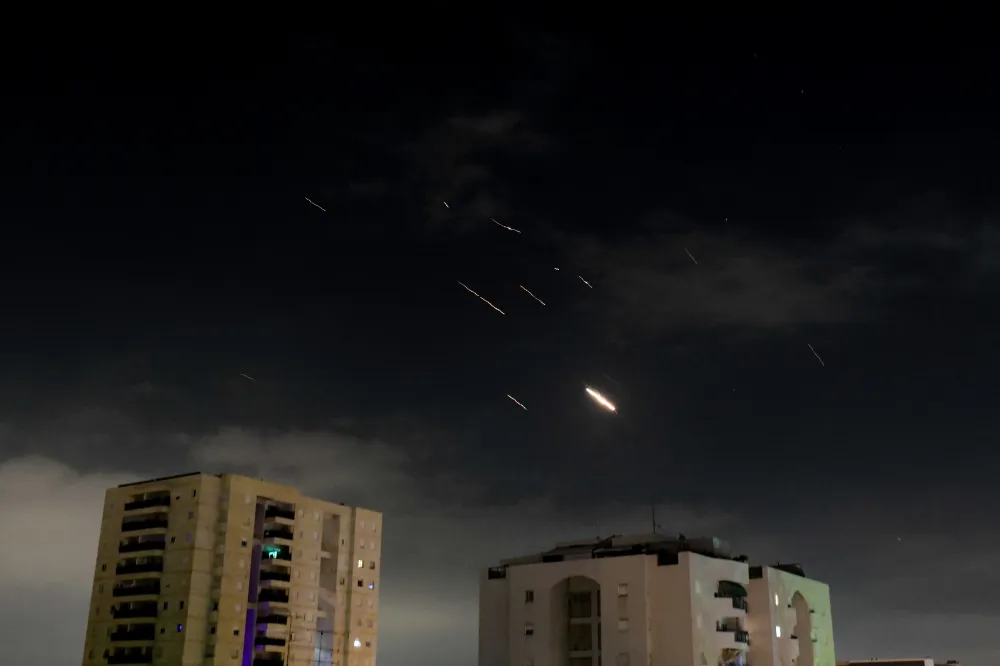
Iran has issued a stern warning to Israel, cautioning against any rash retaliation to its unprecedented aerial assault, asserting that it would be met with an even more potent response. The onslaught, comprising over 300 drones and missiles, was launched overnight in retaliation to Israel’s strike on Iran’s consulate in Syria on April 1st.
Israel claims to have successfully intercepted 99% of the weapons deployed. This marked the first direct attack on Israel by Iran, escalating a shadow war that has spanned years between the two nations. Amid fears of a significant escalation in tensions, global leaders are urging restraint.
Following the attack, Israeli Prime Minister Benjamin Netanyahu vowed unity in overcoming the threat, yet the specifics of Israel’s response remain unclear. Israel’s defense and foreign ministers had previously warned of a retaliatory strike should Iran attack.
Iran’s President Ebrahim Raisi has emphasized that any reckless behavior from Israel or its supporters will face a decisive and stronger retaliation. Iran’s Islamic Revolutionary Guard Corps (IRGC) justified the attack as a response to Israel’s repeated offenses, including the assault on Iran’s consulate.
Iran has also diplomatically engaged, warning the US through Switzerland that backing an Israeli counterattack would result in targeting US regional bases. Iranian Foreign Minister Hossein Amir-Abdollahian assured that attacks against Israel would be limited and for self-defense.
US President Joe Biden reaffirmed America’s commitment to Israel’s security while condemning the attack as unprecedented. Sirens blared across Israel as air defense systems intercepted incoming threats, with explosions heard over Jerusalem.
The targets primarily included military installations in the occupied Golan Heights. Despite the scale of the assault, Israel reported minimal damage, with no casualties except for a severely injured Bedouin girl.
World leaders are deliberating their response to the escalation, with the UN Security Council convening an emergency meeting. UN Secretary-General António Guterres condemned the attack and called for an immediate cessation of hostilities and maximum restraint from all parties.
Various global leaders, including UK Prime Minister Rishi Sunak and the European Union’s foreign affairs chief Josep Borrell, have condemned the attack and emphasized its grave threat to regional security. China and Russia have urged restraint to prevent further escalation.
France has advised its citizens in Iran to temporarily leave due to the risk of military escalation. Pope Francis appealed for a halt to actions that could fuel violence and escalate the conflict in the Middle East.
The heightened tensions follow Hamas attacks on Israel in October, resulting in significant casualties and hostage situations. The subsequent Israeli military operation in Gaza intensified the situation, leading to ongoing unrest.
Amidst this turmoil, Hamas has reiterated its demands for a permanent ceasefire, Israeli withdrawal from Gaza, return of displaced Palestinians, and increased humanitarian aid to the territory.
To read more detailed coverage check out the source of this news: