
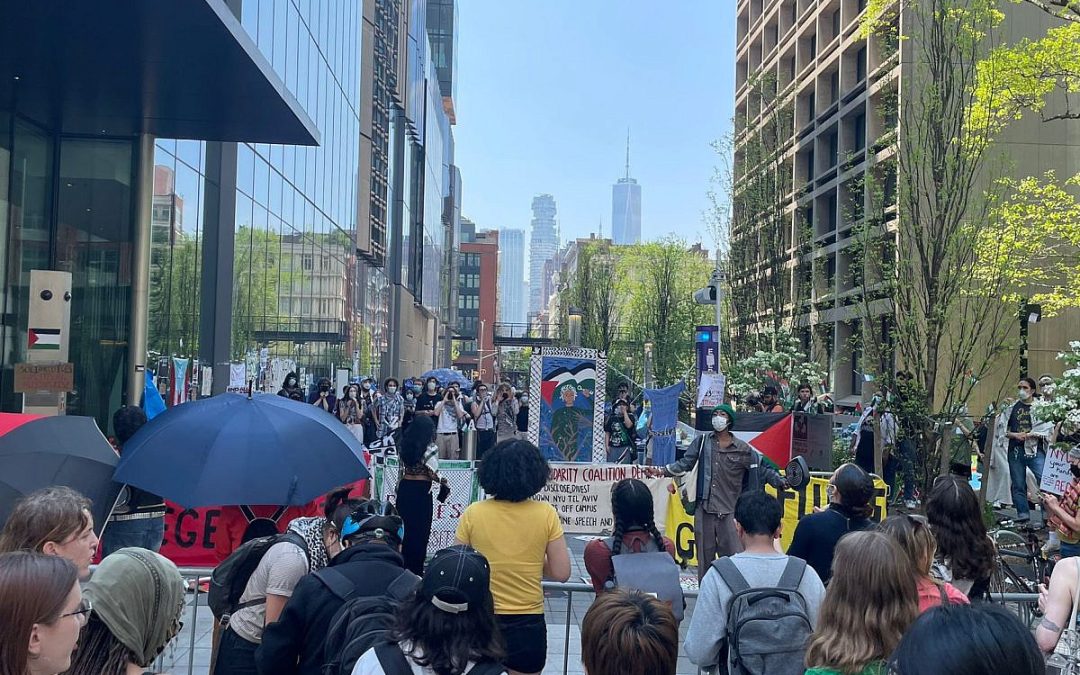
The description of protests for Palestine at NYU as “generation-defining” underscores the significance and impact of these demonstrations on the campus community and beyond.
NYU’s protests for Palestine have galvanized students, faculty, and staff to voice their support for Palestinian rights and demand an end to the Israeli occupation and violence against Palestinians. These protests represent a growing awareness and engagement with the Palestinian struggle for justice and equality, particularly among younger generations who are increasingly questioning long-standing narratives and policies regarding Israel and Palestine.
The demonstrations at NYU have provided a platform for students to express solidarity with Palestinians and raise awareness about the ongoing humanitarian crisis in Gaza, the West Bank, and East Jerusalem. They have also sparked important conversations about issues such as human rights, international law, and U.S. foreign policy in the Middle East.
Moreover, the protests at NYU reflect a broader trend of activism and advocacy for Palestinian rights on college campuses across the United States and around the world. As young people become increasingly aware of global injustices and inequalities, they are mobilizing in solidarity with marginalized communities and calling for systemic change.
The protests at NYU are not only a testament to the power of student activism but also a reminder of the importance of standing up for justice, equality, and human rights, wherever they are threatened. They serve as a rallying cry for a new generation committed to building a more just and equitable world for all.
Over the past two weeks, American university campuses from coast to coast have seen an explosion of pro-Palestine protests, all with roughly the same demands: a ceasefire in Gaza, divestment from companies profiting from the war, a boycott of Israeli academic institutions, and protection of the freedom of speech on campus. It has been decades since American universities have seen such a groundswell of student activism, making certain that this moment will define a generation.
University administrations have nonetheless made sure to put themselves on the wrong side of history, choosing to crack down fiercely on the student protesters rather than listening to their demands. In doing so, however, they have ignited a movement that is proliferating both nationally and internationally, and which shows no signs of submitting to repression.
New York University (NYU), where I study, has seen the largest pro-Palestine protests in its history, with hundreds of students erecting an encampment on campus in solidarity with Palestinians and protesting against what they perceive as the university’s complicity in Israel’s ongoing war on Gaza. Yet the reporting surrounding these protests has been riddled with false accusations and misinformation, including claims that the encampment made the campus unsafe and violated university policies. Having participated in and been witness to the protests myself, I want to set the record straight.
The encampment — known among protesters and their supporters as the “liberated zone” — was set up in the early hours of Monday, April 22, at the university’s Gould Plaza. The students demanded that NYU divest from arms manufacturers profiting from Israel’s attacks on Palestinians in Gaza and the West Bank, and that the university shutter its Tel Aviv campus, which the protesters view as legitimizing Israeli settler colonialism.
Shortly after the encampment was established, NYU security personnel sealed off the area. They prevented students in the encampment from leaving and gathering much-needed supplies, and barred other students from joining or expressing solidarity with their peers. Eventually, student protestors outside the encampment breached the fences, at which point the university declared the protest illegal, claiming the students were “trespassing” on their own campus.
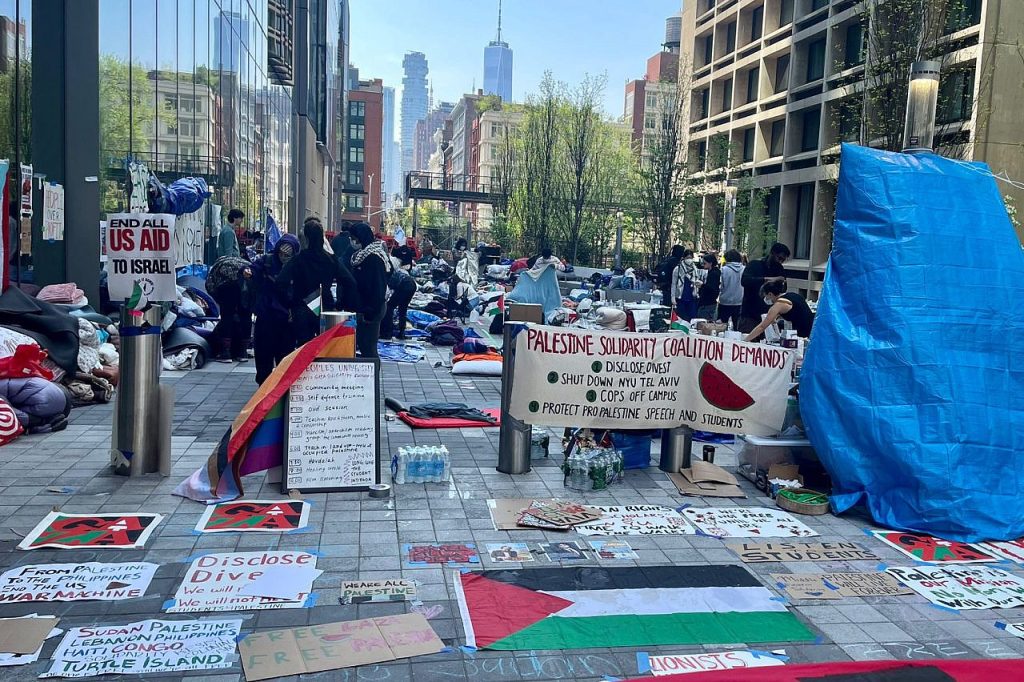
In response to the intervention by NYU security, the protesters rallied additional student support: within hours, the number of demonstrators swelled to hundreds. This rapid mobilization intensified when news spread that the encampment was under threat of being evacuated and the students in it arrested. The protest was notably diverse, with broad representation from various ethnic, religious, and national backgrounds united against genocide.
By Monday evening, around 8 p.m., with the approval of the university administration, NYPD officers dressed in full riot gear, armed with batons and pepper spray, moved in to violently disperse the crowd — right after Jewish students had held a Passover Seder, and as Muslim students began a group prayer. The police forced their way through the human barrier that other students and supporters had formed to protect the encampment, evicted the protesters, destroyed the encampment, and arrested nearly 150 people, both students and faculty.
Following the police crackdown, the remaining protestors marched to the NYPD headquarters, not far from campus. This march was both a continuation of the initial protest against the genocide as well as a direct challenge to the perceived persecution of pro-Palestine activists. The demonstrators, undeterred and determined to express solidarity with those arrested, maintained their presence outside the police headquarters as the detainees were slowly released one-by-one during the early hours of the morning.
Amid these tensions, the NYU administration took further restrictive measures by blocking all students’ access to key campus facilities, including student dormitories, preventing many of them from entering their residences even though it was late at night and growing colder outside. Many students viewed this as an unnecessary and outrageous form of collective punishment against the entire student body.
‘It was peaceful, and they responded with violence’
Contrary to the claims made by the administration, there were no incidents of violence or antisemitism within the encampment. The demonstrations were indeed loud — featuring chants and drums — but they remained peaceful and disciplined throughout. Physical tension and violence only arose from the actions of the NYPD when it arrived in large numbers and full riot gear, in an alarming escalation. This excessive police presence led to undue pressure on the protestors, with the sidewalk outside becoming dangerously overcrowded.
A statement released by the NYU chapter of the American Association of University Professors asserted that faculty members had attempted to negotiate with NYU’s leadership, including the newly-appointed President Linda Mills, to ease tensions and manage the crowd safely by allowing more NYU ID holders onto the plaza where the encampment stood and where the protest was taking place. However, after some progress in the negotiations, the university leadership abruptly stopped their communication with these faculty and called on the police to break up the protest.
NYU students, whether they were involved in the protests or not, seemed to generally share these faculty members’ reaction to the crackdown. One student at the protest, who preferred to remain anonymous for fear of persecution by the university, said that the administration’s response was “exaggerated,” adding: “It was not proportional to the protest. It was peaceful, and they responded with violence.”
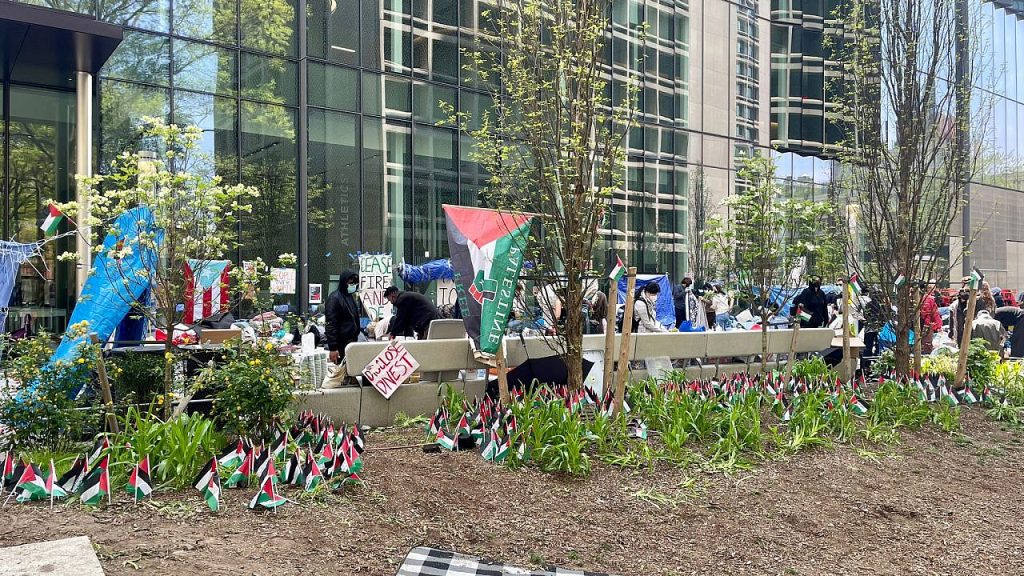
Another student, who was not involved in the protest but also wished to remain anonymous, said: “The administration’s response could definitely have been more peaceful. There is no need for cops.” The student also noted that the protests could have been an opportunity for discussion and dialogue between students on campus about what’s happening in Gaza and the university’s role in the war — but that opportunity was firmly rejected by the administration. “Our school isn’t doing anything to promote any sort of dialogue and understanding and is just using cops to try and end this,” they said.
“If higher up people listened to the students instead of getting the police involved, it would have been resolved much better,” the student continued. “I think there’s a lot of pressure from the donors to end this as quickly as possible, even if it means university presidents take the hit.”
On Wednesday, two days after the destruction of the encampment, NYU students picketed outside the university’s Elmer Holmes Bobst Library, while a small group of pro-Israel counter-protestors accused them of supporting terrorism and antisemitism. On Friday, April 26, NYU students re-established their encampment outside the newly-built, $1.2 billion John A. Paulson Center.
On April 29, the NYU administration threatened to suspend students participating in the encampment if they did not evacuate by noon, with administrators at Columbia University issuing a similar ultimatum. The student bodies at both universities, as well as at CUNY (CCNY), FIT, and The New School, mobilized in a call to defend the encampments across New York City. None of the encampments have been evacuated as of this writing.
Meanwhile, the protests at Columbia reached unprecedented attendance — almost triple that of the first day of the encampment — as some American officials, including House Speaker Mike Johnson, called on the National Guard to be deployed to suppress the protests. This disturbing call was particularly noteworthy given the upcoming 54th anniversary of the Kent State massacre, when National Guard troops killed four students and injured nine others at Kent State University for protesting against U.S. involvement in the Vietnam War.
Eternal flames of solidarity
The ongoing protests at NYU over the war in Gaza are, of course, not taking place in isolation. Since students at Columbia erected their encampment two weeks ago, there have been similar encampments, sit-ins, or other forms of large-scale protest at over 120 American universities. The response by federal, state, and local officials, as well as by university administrations, has been swift, violent, and unrelenting.
In just 10 days, over 1,000 students, faculty, and activists were arrested across American university campuses. In Boston, 108 students at Emerson College were arrested and four police officers were injured; the Emerson student government has since called on the college’s president to resign. In a truly heinous event at Northeastern University, also in Boston, over 100 students were arrested after a pro-Israel agitator carrying an Israeli flag disgustingly shouted “Kill the Jews!” which the university administration used as pretense to authorize mass arrests by police.
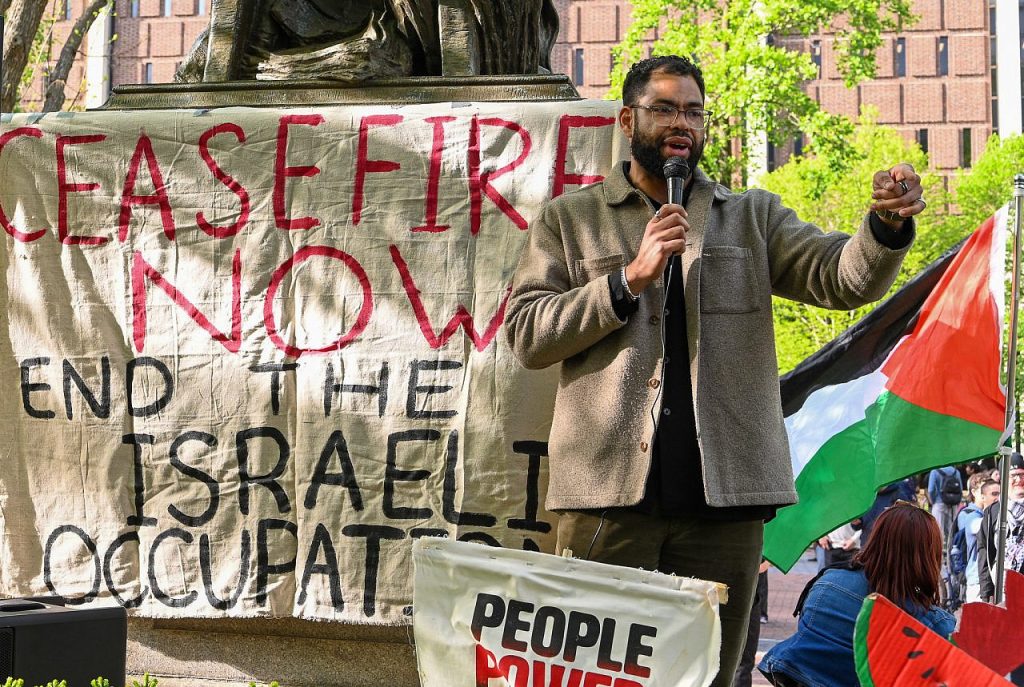
To read more detailed coverage check out the source of this news: