
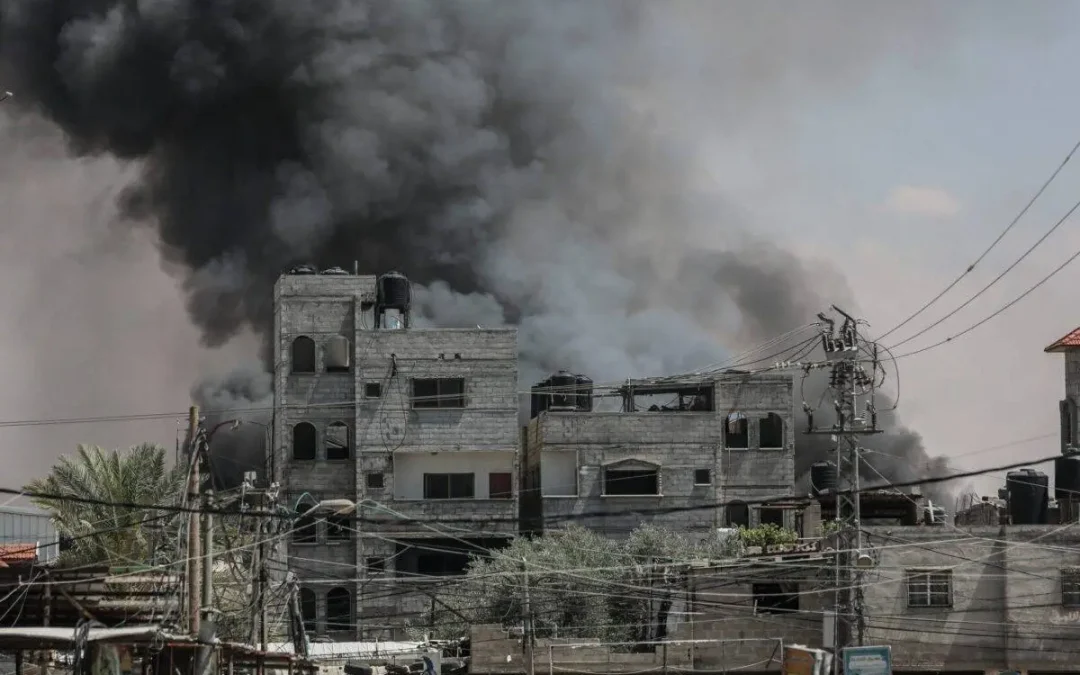
The Israeli army’s expanded authorization for bombing non-military targets, the loosening of constraints regarding expected civilian casualties, and the use of an artificial intelligence system to generate more potential targets than ever before, appear to have contributed to the destructive nature of the initial stages of Israel’s current war on the Gaza Strip, an investigation by +972 Magazine and Local Call reveals. These factors, as described by current and former Israeli intelligence members, have likely played a role in producing what has been one of the deadliest military campaigns against Palestinians since the Nakba of 1948.
The investigation by +972 and Local Call is based on conversations with seven current and former members of Israel’s intelligence community — including military intelligence and air force personnel who were involved in Israeli operations in the besieged Strip — in addition to Palestinian testimonies, data, and documentation from the Gaza Strip, and official statements by the IDF Spokesperson and other Israeli state institutions.
Compared to previous Israeli assaults on Gaza, the current war — which Israel has named “Operation Iron Swords,” and which began in the wake of the Hamas-led assault on southern Israel on October 7 — has seen the army significantly expand its bombing of targets that are not distinctly military in nature. These include private residences as well as public buildings, infrastructure, and high-rise blocks, which sources say the army defines as “power targets” (“matarot otzem”).
The bombing of power targets, according to intelligence sources who had first-hand experience with its application in Gaza in the past, is mainly intended to harm Palestinian civil society: to “create a shock” that, among other things, will reverberate powerfully and “lead civilians to put pressure on Hamas,” as one source put it.
Several of the sources, who spoke to +972 and Local Call on the condition of anonymity, confirmed that the Israeli army has files on the vast majority of potential targets in Gaza — including homes — which stipulate the number of civilians who are likely to be killed in an attack on a particular target. This number is calculated and known in advance to the army’s intelligence units, who also know shortly before carrying out an attack roughly how many civilians are certain to be killed.
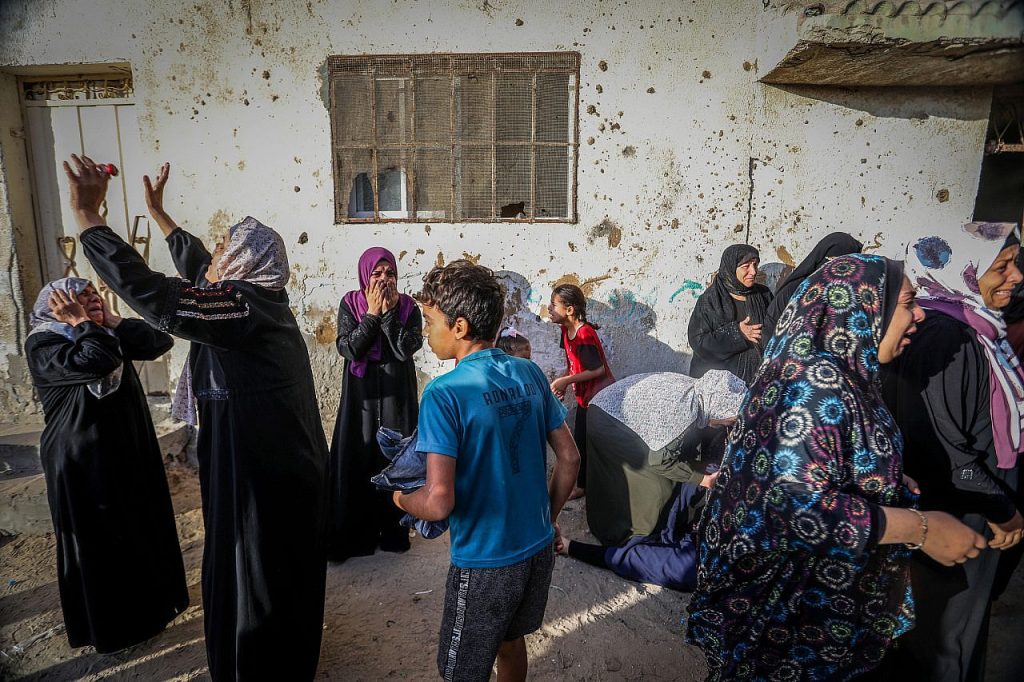
In one case discussed by the sources, the Israeli military command knowingly approved the killing of hundreds of Palestinian civilians in an attempt to assassinate a single top Hamas military commander. “The numbers increased from dozens of civilian deaths [permitted] as collateral damage as part of an attack on a senior official in previous operations, to hundreds of civilian deaths as collateral damage,” said one source.
“Nothing happens by accident,” said another source. “When a 3-year-old girl is killed in a home in Gaza, it’s because someone in the army decided it wasn’t a big deal for her to be killed — that it was a price worth paying in order to hit [another] target. We are not Hamas. These are not random rockets. Everything is intentional. We know exactly how much collateral damage there is in every home.”
According to the investigation, another reason for the large number of targets, and the extensive harm to civilian life in Gaza, is the widespread use of a system called “Habsora” (“The Gospel”), which is largely built on artificial intelligence and can “generate” targets almost automatically at a rate that far exceeds what was previously possible. This AI system, as described by a former intelligence officer, essentially facilitates a “mass assassination factory.”
According to the sources, the increasing use of AI-based systems like Habsora allows the army to carry out strikes on residential homes where a single Hamas member lives on a massive scale, even those who are junior Hamas operatives. Yet testimonies of Palestinians in Gaza suggest that since October 7, the army has also attacked many private residences where there was no known or apparent member of Hamas or any other militant group residing. Such strikes, sources confirmed to +972 and Local Call, can knowingly kill entire families in the process.
In the majority of cases, the sources added, military activity is not conducted from these targeted homes. “I remember thinking that it was like if [Palestinian militants] would bomb all the private residences of our families when [Israeli soldiers] go back to sleep at home on the weekend,” one source, who was critical of this practice, recalled.
Another source said that a senior intelligence officer told his officers after October 7 that the goal was to “kill as many Hamas operatives as possible,” for which the criteria around harming Palestinian civilians were significantly relaxed. As such, there are “cases in which we shell based on a wide cellular pinpointing of where the target is, killing civilians. This is often done to save time, instead of doing a little more work to get a more accurate pinpointing,” said the source.
The result of these policies is the staggering loss of human life in Gaza since October 7. Over 300 families have lost 10 or more family members in Israeli bombings in the past two months — a number that is 15 times higher than the figure from what was previously Israel’s deadliest war on Gaza, in 2014. At the time of writing, around 15,000 Palestinians have been reported killed in the war, and counting.
“All of this is happening contrary to the protocol used by the IDF in the past,” a source explained. “There is a feeling that senior officials in the army are aware of their failure on October 7, and are busy with the question of how to provide the Israeli public with an image [of victory] that will salvage their reputation.”
‘An excuse to cause destruction’
Israel launched its assault on Gaza in the aftermath of the October 7 Hamas-led offensive on southern Israel. During that attack, under a hail of rocket fire, Palestinian militants massacred more than 840 civilians and killed 350 soldiers and security personnel, kidnapped around 240 people — civilians and soldiers — to Gaza, and committed widespread sexual violence, including rape, according to a report by the NGO Physicians for Human Rights Israel.
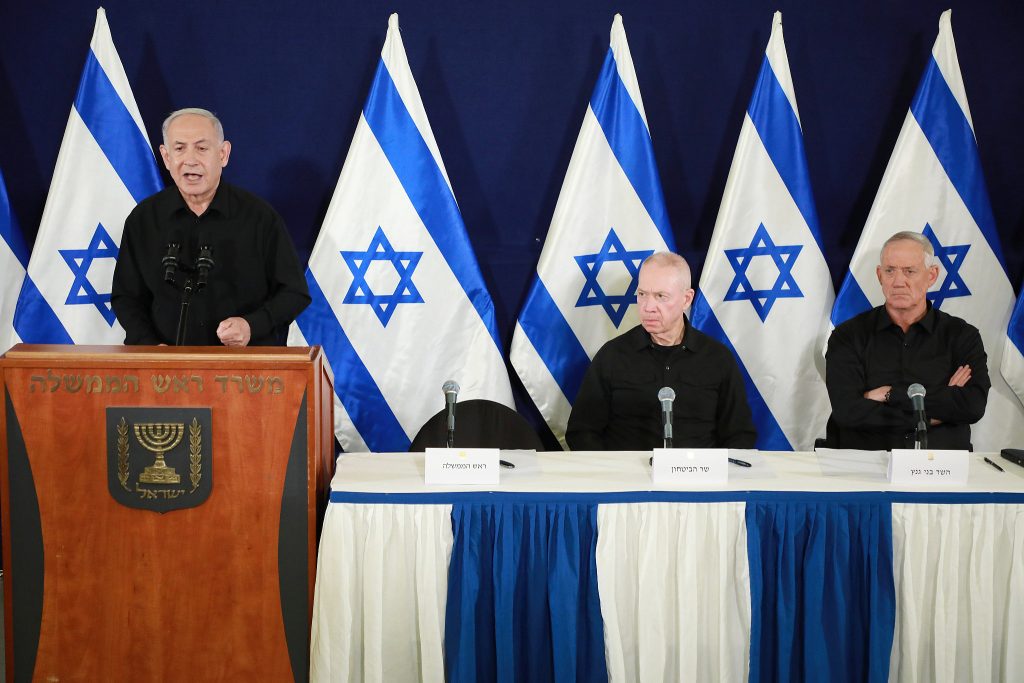
From the first moment after the October 7 attack, decisionmakers in Israel openly declared that the response would be of a completely different magnitude to previous military operations in Gaza, with the stated aim of totally eradicating Hamas. “The emphasis is on damage and not on accuracy,” said IDF Spokesperson Daniel Hagari on Oct. 9. The army swiftly translated those declarations into actions.
According to the sources who spoke to +972 and Local Call, the targets in Gaza that have been struck by Israeli aircraft can be divided roughly into four categories. The first is “tactical targets,” which include standard military targets such as armed militant cells, weapon warehouses, rocket launchers, anti-tank missile launchers, launch pits, mortar bombs, military headquarters, observation posts, and so on.
The second is “underground targets” — mainly tunnels that Hamas has dug under Gaza’s neighborhoods, including under civilian homes. Aerial strikes on these targets could lead to the collapse of the homes above or near the tunnels.
The third is “power targets,” which includes high-rises and residential towers in the heart of cities, and public buildings such as universities, banks, and government offices. The idea behind hitting such targets, say three intelligence sources who were involved in planning or conducting strikes on power targets in the past, is that a deliberate attack on Palestinian society will exert “civil pressure” on Hamas.
The final category consists of “family homes” or “operatives’ homes.” The stated purpose of these attacks is to destroy private residences in order to assassinate a single resident suspected of being a Hamas or Islamic Jihad operative. However, in the current war, Palestinian testimonies assert that some of the families that were killed did not include any operatives from these organizations.
In the early stages of the current war, the Israeli army appears to have given particular attention to the third and fourth categories of targets. According to statements on Oct. 11 by the IDF Spokesperson, during the first five days of fighting, half of the targets bombed — 1,329 out of a total 2,687 — were deemed power targets.
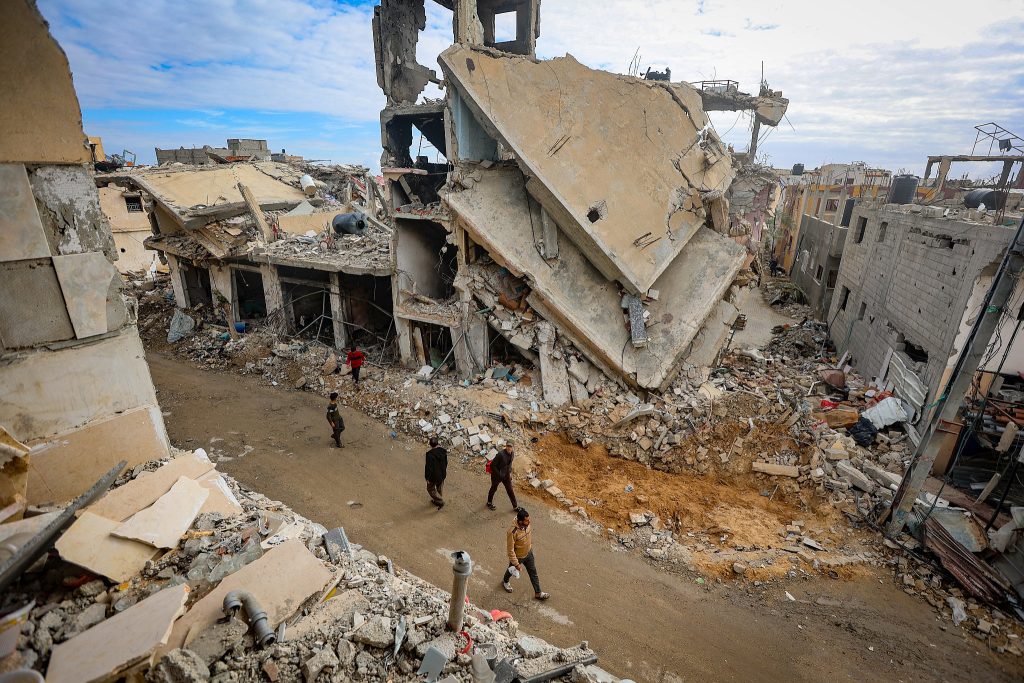
“We are asked to look for high-rise buildings with half a floor that can be attributed to Hamas,” said one source who took part in previous Israeli offensives in Gaza. “Sometimes it is a militant group’s spokesperson’s office, or a point where operatives meet. I understood that the floor is an excuse that allows the army to cause a lot of destruction in Gaza. That is what they told us.
“If they would tell the whole world that the [Islamic Jihad] offices on the 10th floor are not important as a target, but that its existence is a justification to bring down the entire high-rise with the aim of pressuring civilian families who live in it in order to put pressure on terrorist organizations, this would itself be seen as terrorism. So they do not say it,” the source added.
Various sources who served in IDF intelligence units said that at least until the current war, army protocols allowed for attacking power targets only when the buildings were empty of residents at the time of the strike. However, testimonies and videos from Gaza suggest that since October 7, some of these targets have been attacked without prior notice being given to their occupants, killing entire families as a result.
The wide-scale targeting of residential homes can be derived from public and official data. According to the Government Media Office in Gaza — which has been providing death tolls since the Gaza Health Ministry stopped doing so on Nov. 11 due to the collapse of health services in the Strip — by the time the temporary ceasefire took hold on Nov. 23, Israel had killed 14,800 Palestinians in Gaza; approximately 6,000 of them were children and 4,000 were women, who together constitute more than 67 percent of the total. The figures provided by the Health Ministry and the Government Media Office — both of which fall under the auspices of the Hamas government — do not deviate significantly from Israeli estimates.
The Gaza Health Ministry, furthermore, does not specify how many of the dead belonged to the military wings of Hamas or Islamic Jihad. The Israeli army estimates that it has killed between 1,000 and 3,000 armed Palestinian militants. According to media reports in Israel, some of the dead militants are buried under the rubble or inside Hamas’ underground tunnel system, and therefore were not tallied in official counts.
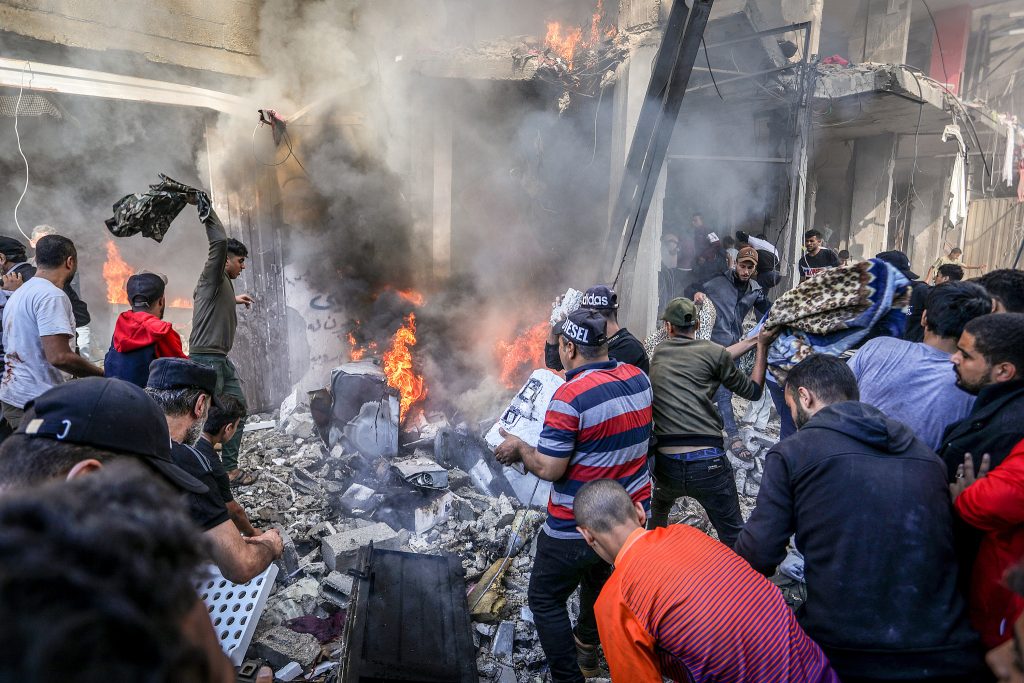
UN data for the period up until Nov. 11, by which time Israel had killed 11,078 Palestinians in Gaza, states that at least 312 families have lost 10 or more people in the current Israeli attack; for the sake of comparison, during “Operation Protective Edge” in 2014, 20 families in Gaza lost 10 or more people. At least 189 families have lost between six and nine people according to the UN data, while 549 families have lost between two and five people. No updated breakdowns have yet been given for the casualty figures published since Nov. 11.
The massive attacks on power targets and private residences came at the same time as the Israeli army, on Oct. 13, called on the 1.1 million residents of the northern Gaza Strip — most of them residing in Gaza City — to leave their homes and move to the south of the Strip. By that date, a record number of power targets had already been bombed, and more than 1,000 Palestinians had already been killed, including hundreds of children.
In total, according to the UN, 1.7 million Palestinians, the vast majority of the Strip’s population, have been displaced within Gaza since October 7. The army claimed that the demand to evacuate the Strip’s north was intended to protect civilian lives. Palestinians, however, see this mass displacement as part of a “new Nakba” — an attempt to ethnically cleanse part or all of the territory.
‘They knocked down a high-rise for the sake of it’
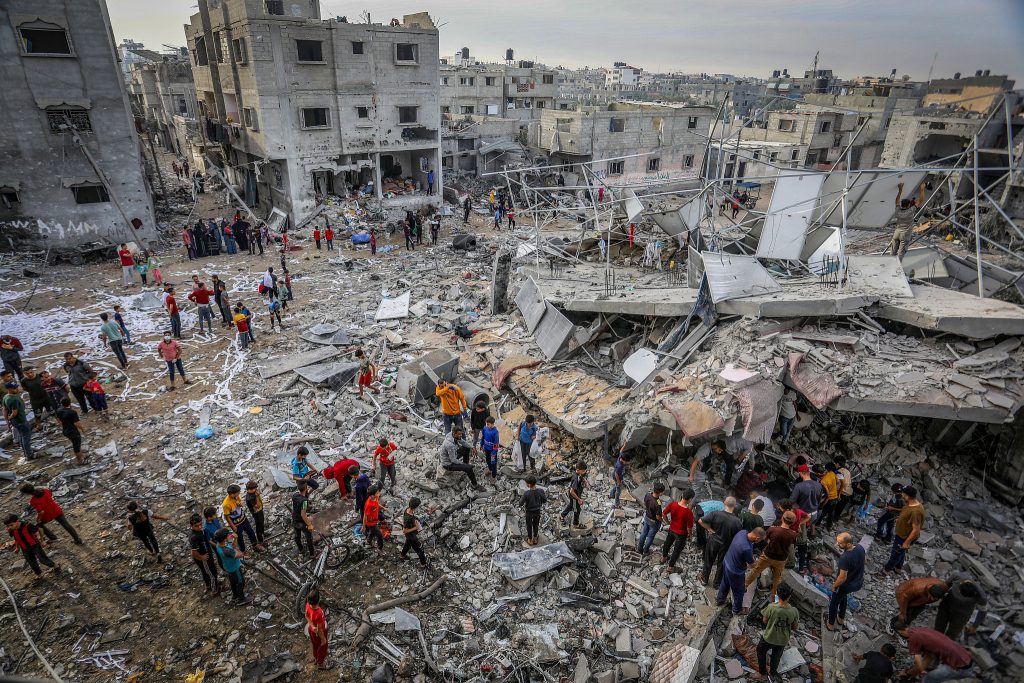
According to the Israeli army, during the first five days of fighting it dropped 6,000 bombs on the Strip, with a total weight of about 4,000 tons. Media outlets reported that the army had wiped out entire neighborhoods; according to the Gaza-based Al Mezan Center for Human Rights, these attacks led to “the complete destruction of residential neighborhoods, the destruction of infrastructure, and the mass killing of residents.”
As documented by Al Mezan and numerous images coming out of Gaza, Israel bombed the Islamic University of Gaza, the Palestinian Bar Association, a UN building for an educational program for outstanding students, a building belonging to the Palestine Telecommunications Company, the Ministry of National Economy, the Ministry of Culture, roads, and dozens of high-rise buildings and homes — especially in Gaza’s northern neighborhoods.
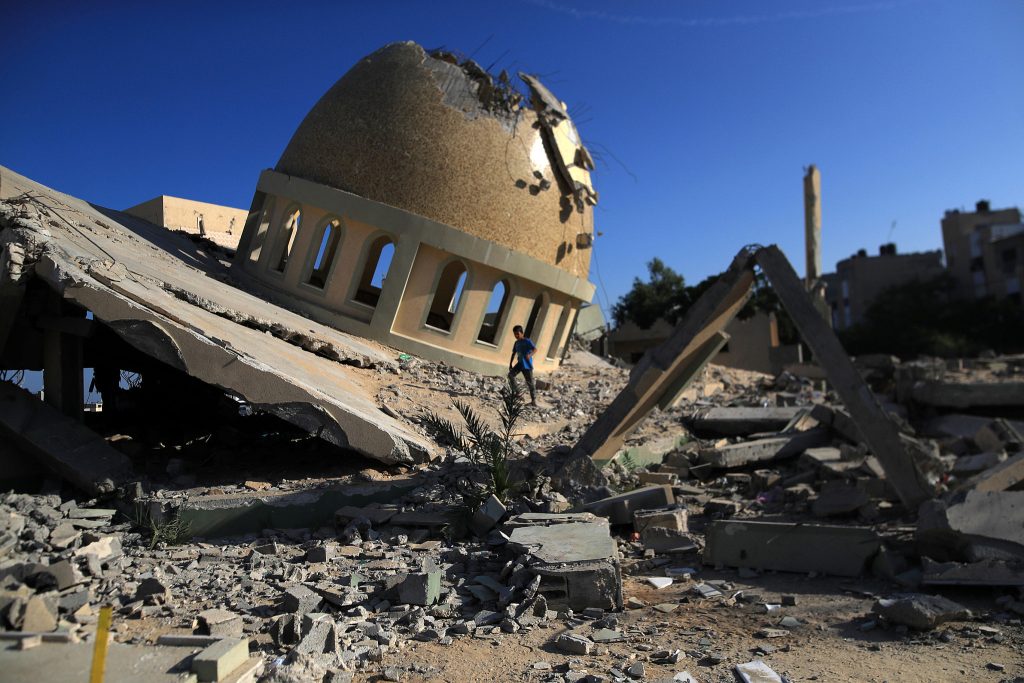
On the fifth day of fighting, the IDF Spokesperson distributed to military reporters in Israel “before and after” satellite images of neighborhoods in the northern Strip, such as Shuja’iyya and Al-Furqan (nicknamed after a mosque in the area) in Gaza City, which showed dozens of destroyed homes and buildings. The Israeli army said that it had struck 182 power targets in Shuja’iyya and 312 power targets in Al-Furqan.
The Chief of Staff of the Israeli Air Force, Omer Tishler, told military reporters that all of these attacks had a legitimate military target, but also that entire neighborhoods were attacked “on a large scale and not in a surgical manner.” Noting that half of the military targets up until Oct. 11 were power targets, the IDF Spokesperson said that “neighborhoods that serve as terror nests for Hamas” were attacked and that damage was caused to “operational headquarters,” “operational assets,” and “assets used by terrorist organizations inside residential buildings.” On Oct. 12, the Israeli army announced it had killed three “senior Hamas members” — two of whom were part of the group’s political wing.
Yet despite the unbridled Israeli bombardment, the damage to Hamas’ military infrastructure in northern Gaza during the first days of the war appears to have been very minimal. Indeed, intelligence sources told +972 and Local Call that military targets that were part of power targets have previously been used many times as a fig leaf for harming the civilian population. “Hamas is everywhere in Gaza; there is no building that does not have something of Hamas in it, so if you want to find a way to turn a high-rise into a target, you will be able to do so,” said one former intelligence official.
“They will never just hit a high-rise that does not have something we can define as a military target,” said another intelligence source, who carried out previous strikes against power targets. “There will always be a floor in the high-rise [associated with Hamas]. But for the most part, when it comes to power targets, it is clear that the target doesn’t have military value that justifies an attack that would bring down the entire empty building in the middle of a city, with the help of six planes and bombs weighing several tons.”
Indeed, according to sources who were involved in the compiling of power targets in previous wars, although the target file usually contains some kind of alleged association with Hamas or other militant groups, striking the target functions primarily as a “means that allows damage to civil society.” The sources understood, some explicitly and some implicitly, that damage to civilians is the real purpose of these attacks.
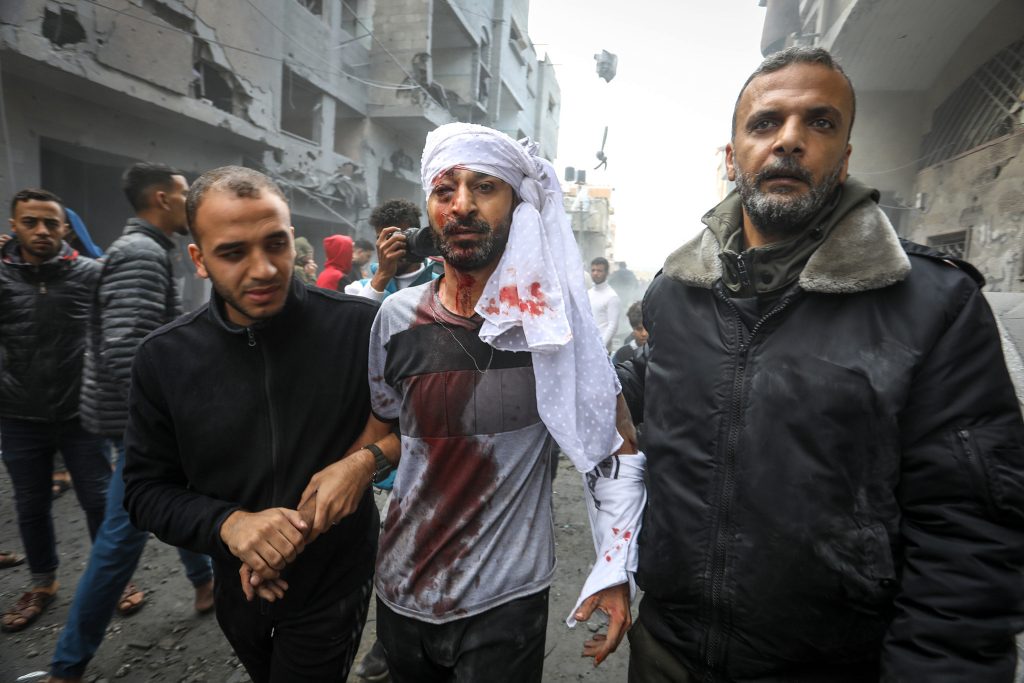
The statement evokes a strong and critical portrayal of Israel’s military actions in Gaza, characterizing them as a “mass assassination factory.” This language suggests a deliberate and systematic campaign of targeted killings or airstrikes aimed at individuals or groups deemed to be enemies by Israeli authorities.
The term “assassination” carries connotations of unlawfulness and extrajudicial violence, implying that Israel’s actions may be seen as violating international law or human rights norms. By describing the bombings as “calculated,” the statement suggests careful planning and strategic decision-making behind Israel’s military operations in Gaza.
This description reflects a perspective that condemns Israel’s use of force in the conflict and portrays it as disproportionate or unjustified. It underscores the human cost of the violence in Gaza and raises questions about the ethics and legality of Israel’s military tactics in densely populated civilian areas.
It’s important to note that discussions surrounding the Israeli-Palestinian conflict are often highly polarized, with differing interpretations of events and narratives. Views on Israel’s military actions in Gaza can vary widely depending on one’s political, ideological, and cultural perspectives.
To read more detailed coverage check out the source of this news:
https://www.972mag.com/mass-assassination-factory-israel-calculated-bombing-gaza/