
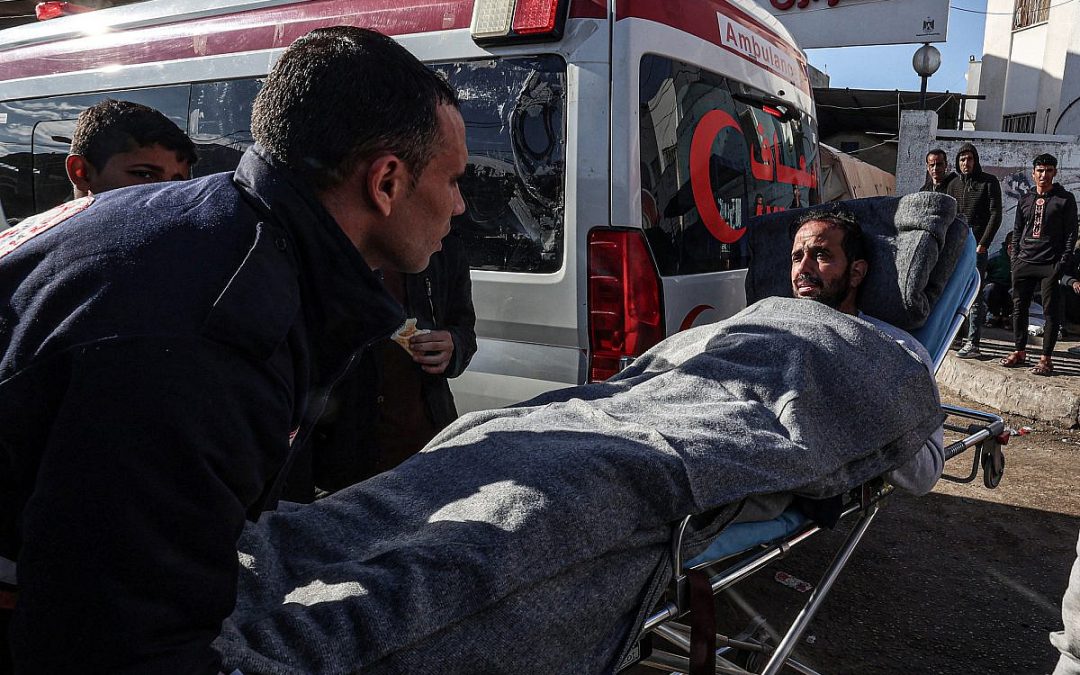
Almost no facilities remain to treat the wounded in Gaza’s southernmost city, as doctors fear a repeat of Israel’s attacks on hospitals across the Strip.
On May 30, the World Health Organization announced that Rafah’s last remaining hospital, the Al-Helal al-Emirati Hospital, had gone out of service. The destruction of the southern Gaza city’s health care system, which comes after more than two dozen hospitals across the Strip have completely shut down as a result of Israel’s assault, encapsulates the human toll of the intensifying Israeli military operation in Rafah.
Far from the “limited” invasion that Israel’s leaders proclaimed, Israeli forces are currently occupying the heart of the city and remain in control of the Rafah Crossing and Philadelphi Corridor, while airstrikes continue to pummel camps for displaced families. Since Israel’s incursion began on May 6, more than 1 million Palestinians have fled Gaza’s last refuge.
In addition to the Emirati Hospital, the Abu Yousef al-Najjar Hospital and the Kuwaiti Hospital have been forced to cease all functions in recent weeks. With several smaller clinics closing too, all that remains to serve Rafah’s sick and wounded is two small field hospitals in the coastal area of Al-Mawasi — one run by the United Arab Emirates, and the other by the International Medical Corps — which are ill-equipped to deal with the scale of suffering among those unable or unwilling to flee the city.
With Israel’s ground invasion continuing to advance toward western Rafah, these remaining clinics may also soon be forced to evacuate. And while a trickle of seriously wounded patients had been leaving Gaza via the Rafah Crossing for treatment abroad, nobody has been able to escape the Strip since Israel occupied the crossing.
Muhammad Zaqout, the Gaza Health Ministry’s director general of hospitals, told +972 that staff at Rafah’s hospitals evacuated “because they feared a repeat of what happened at Nasser Medical Complex and Al-Shifa Hospital.” Israeli forces besieged and raided both hospitals in recent months, in Khan Younis and Gaza City respectively; after their withdrawal, mass graves containing hundreds of bodies were found at both sites.
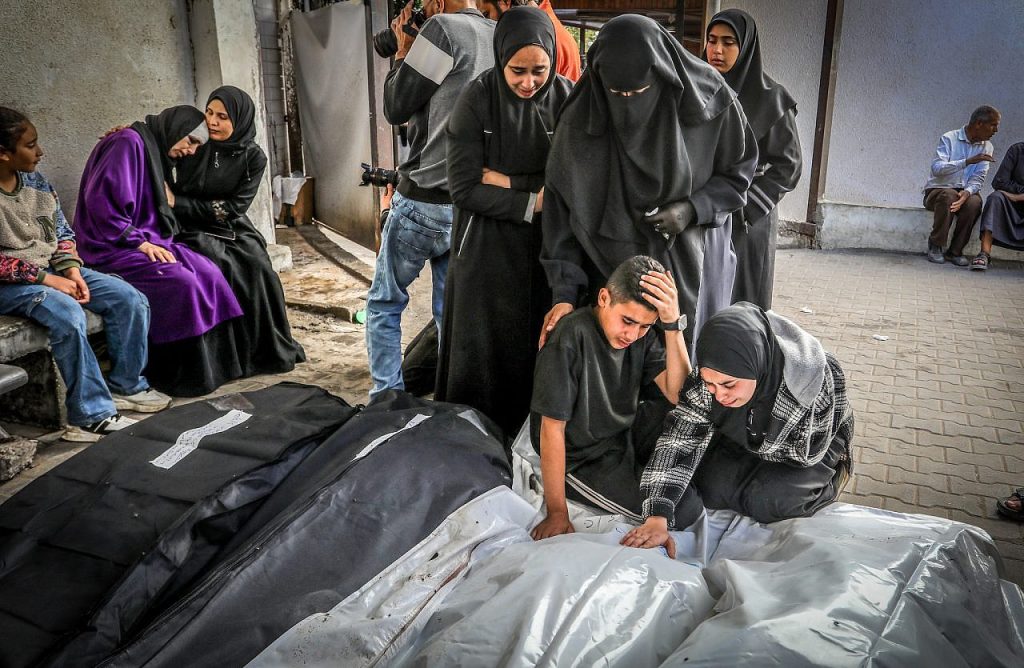
“The situation has become very dangerous,” she said. “Two paramedics were martyred during their work to transport the wounded. The Israeli army does not exclude medical personnel from its [attacks]. We are all at risk of being targeted or arrested.”
“There are patients who were forced to leave the hospital in poor condition who require follow-up,” Sadiq continued. “Field hospitals are unable to receive large numbers [of patients] due to their clinical capacity and lack of treatments.” The lack of food, she added, only worsens their conditions and prevents a full recovery.
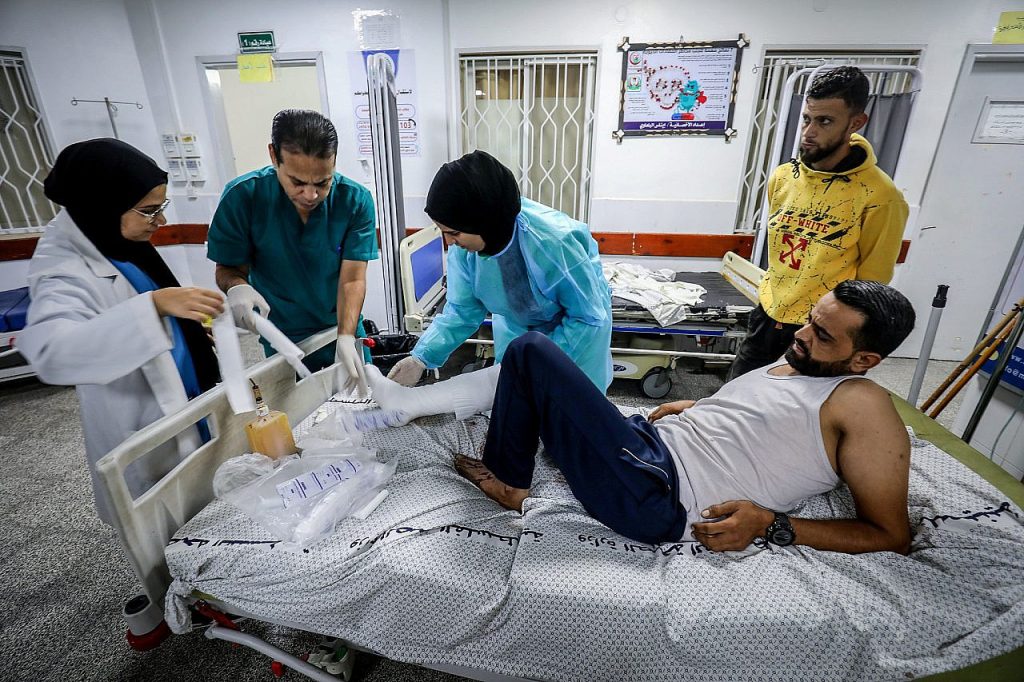
Yet just as the ability of Rafah’s health services to treat the wounded declines, the need is becoming ever greater. As Israel’s ground assault intensifies, so have the army’s attacks on Palestinians who remain in the city — including in areas it had designated as “safe zones” such as Al-Mawasi and Tel al-Sultan.
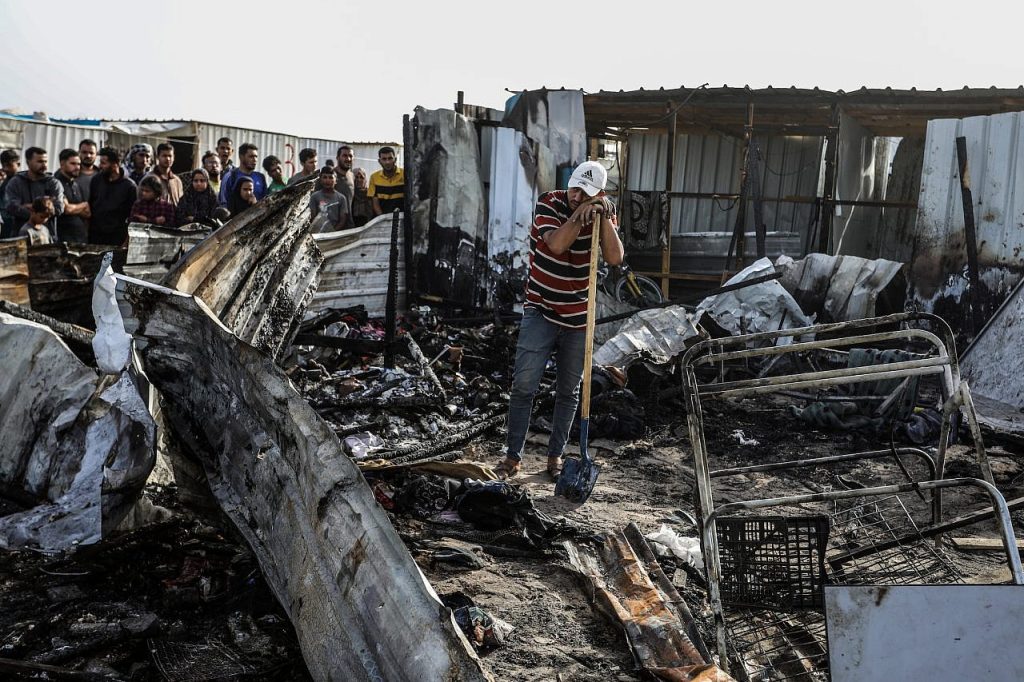
Around 45 Palestinians were killed in a single attack on a refugee camp on the night of May 26, when much of the encampment was engulfed in flames and many burned to death inside their tents. Another attack two days later on tents in Al-Mawasi killed 21.
‘We saw tents catching fire and children burning inside’
Marwa Asraf, 38, witnessed the attack on Al-Mawasi. Originally from Beit Hanoun in the north, Asraf was displaced to Al-Mawasi with six of her family members. “What we are experiencing in this area is terrifying,” she told +972. “We do not feel safe at all. Shells and missiles are falling continuously.”
At the time of the Al-Mawasi bombing, Asraf had gone to search for water for their family. “I left my children with their father and grandmother,” she recounted. “Suddenly, I heard the sound of an explosion and then the screams of the displaced people. I fell to the ground from the intensity of the sound. I was crying. I thought that my children had been bombed.
“I started running mindlessly, and left the water jug on the ground,” Asraf continued. “I returned to the tent and found my children crying. Their grandmother was crying, too; she told me that my husband Ahmed ran toward the tents to check on the wounded, and that she was very concerned for him. I did not believe that my children were okay. One displaced person staying near us was killed when shrapnel entered the tent.
“This situation is very tiring,” she went on. “We are tired of being displaced from the northern Gaza Strip, for eight months, and we are waiting to return to our homes. We were a little reassured because we were in a ‘safe area,’ but whoever says that is a liar. We lost more than seventy people, including women and children, while they were in their tents.”
Beyond its emotional cost, Asraf explained, constantly relocating with her family has taken a financial toll. “We need to hire a taxi to take us to a new place every time we have to move. We spent all our money during this war just to buy basic necessities. Now I very much regret [leaving] the north. I wish I had stayed there and died in my home instead of here in the area they said was safe.”
Riyad Rawida, 43, was also displaced to Al-Mawasi from his home in the center of Rafah. He fled with 20 of his relatives after they spotted Israeli tanks penetrating the Zoroub roundabout area, approaching Tel al-Sultan. “We began to hear shelling and clashes,” he recalled. “We saw people leaving their homes and fleeing to Al-Mawasi. Tel al-Sultan became almost empty. We had no choice.”
Unlike the vast majority of Gaza’s displaced residents, this was the first time Rawida and his family had been forced to flee their homes. “It was difficult for us — we were in our homes from the beginning of the war for more than seven and a half months. Many [Israeli] statements reassured us that the area was safe, and that the world rejected any Israeli military operation in Rafah. But the army broke those lines and attacked the city, gradually advancing toward the western areas.
“Now we are in Al-Mawasi and we are afraid of being targeted at any moment, as happened in the tents last week,” he continued. “There is no safety at all. I fear for my children. The tents do not protect anyone. In Tel al-Sultan, we saw the tents catching fire and children burning inside them. The situation in Rafah is dangerous, the streets are empty, and unfortunately life has stopped here.”
To read more detailed coverage check out the source of this news: