
The statement from the EU chief highlighting that the volume of aid reaching Gaza is “too small to match massive needs” underscores the severity of the humanitarian crisis in the region and the urgent need for increased support and assistance.
Gaza has been grappling with a protracted humanitarian crisis, exacerbated by years of conflict, blockade, and economic hardship. Basic necessities such as food, water, shelter, and medical care are in short supply, and the civilian population, including women, children, and the elderly, is suffering immensely.
The inadequacy of aid reaching Gaza reflects the scale of the challenge and the limitations of current humanitarian efforts. Despite the efforts of the international community and humanitarian organizations, the needs of the population far outstrip the available resources, leaving many vulnerable individuals without the assistance they require to survive and recover.
Addressing the humanitarian crisis in Gaza requires a comprehensive and coordinated response from the international community, including increased humanitarian aid, access to essential services, and support for reconstruction and development efforts. It also necessitates efforts to address the root causes of the crisis, including the blockade of Gaza and the underlying political and economic grievances fueling the conflict.
The EU chief’s statement underscores the importance of scaling up humanitarian assistance and mobilizing greater international support to meet the immense needs of the population in Gaza. It serves as a call to action for the international community to redouble its efforts to alleviate the suffering of the people of Gaza and work towards a sustainable and just resolution to the Israeli-Palestinian conflict.
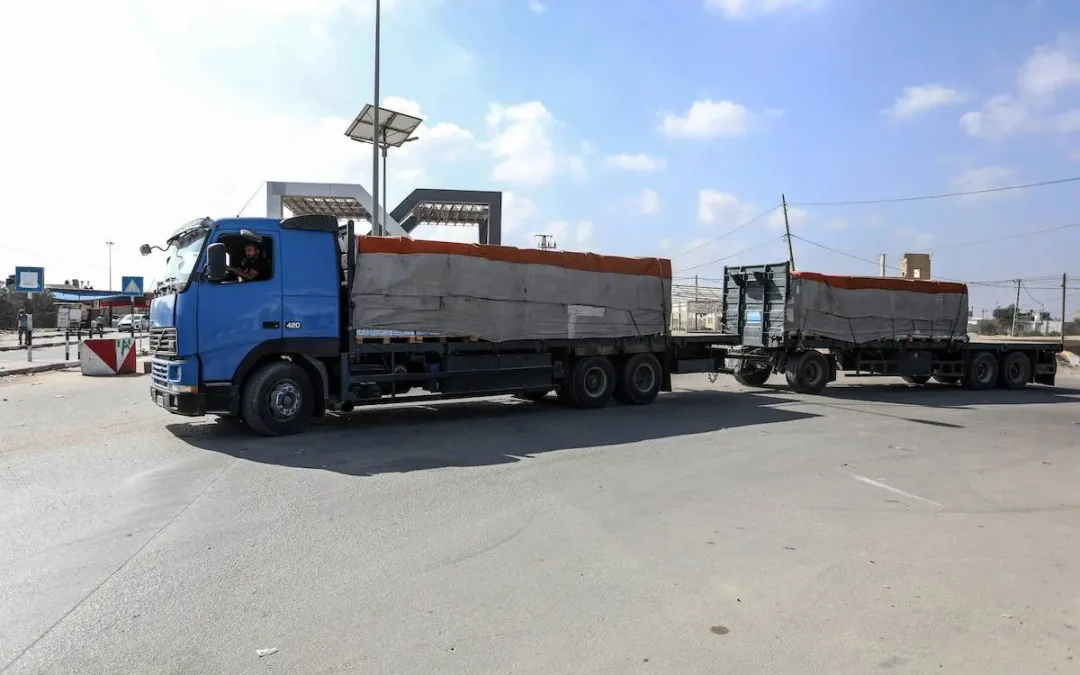
The European Commission head, on Monday, announced that the EU is increasing its humanitarian aid to Gaza by another €25 million ($26.8 million), saying the volume of aid entering Gaza is “too small to match the massive humanitarian needs” there, Anadolu Agency reports.
“Aid is now entering through the Rafah border crossing, but the volumes remain too small to match the massive humanitarian needs in Gaza,” Ursula von der Leyen said in her speech at the EU Ambassadors Conference in Brussels.
Underlining that aiding civilians in Gaza is “essential” amid “dire” humanitarian situation, von der Leyen said: “The death toll and the suffering of Palestinian civilians is tragic.”
She then announced an extra €25 million in humanitarian aid, bringing total aid to €100 million.
The bloc, she said, is also working on “complementary routes” such as maritime corridor from the Greek Cypriot administration of Southern Cyprus to “guarantee a sustained, regulated and robust flow” of aid to Gaza.
“While Israel has the right to fight Hamas, it is also essential that it strives to avoid civilian casualties and to be as targeted as possible,” she said, adding: “Every human life matters, be it Israeli or Palestinian.”
She said that there is “no other lasting solution to this than having a two-state solution.”
According to von der Leyen, such a solution would require Gaza to not be a “safe haven for terrorists,” adding that there can be “no long-term Israeli security presence” in Gaza.
She said that there should be “no forced displacement of Palestinians from Gaza” and “no sustained blockade of Gaza.”
The Israeli army has launched air and ground attacks on the Gaza Strip following a cross-border attack by Hamas on 7 October.
At least 10,022 Palestinians, including 4,104 children and 2,641 women, have been killed in the Israeli bombardments in the Gaza Strip. The Israeli death toll is nearly 1,600, according to official figures.
Besides the large number of casualties and massive displacements, basic supplies are running low for Gaza’s 2.3 million residents due to the Israeli siege.
Thousands took to the streets in many countries to express support for Palestine, while some of the protests are banned in France.
To read more detailed coverage check out the source of this news: