
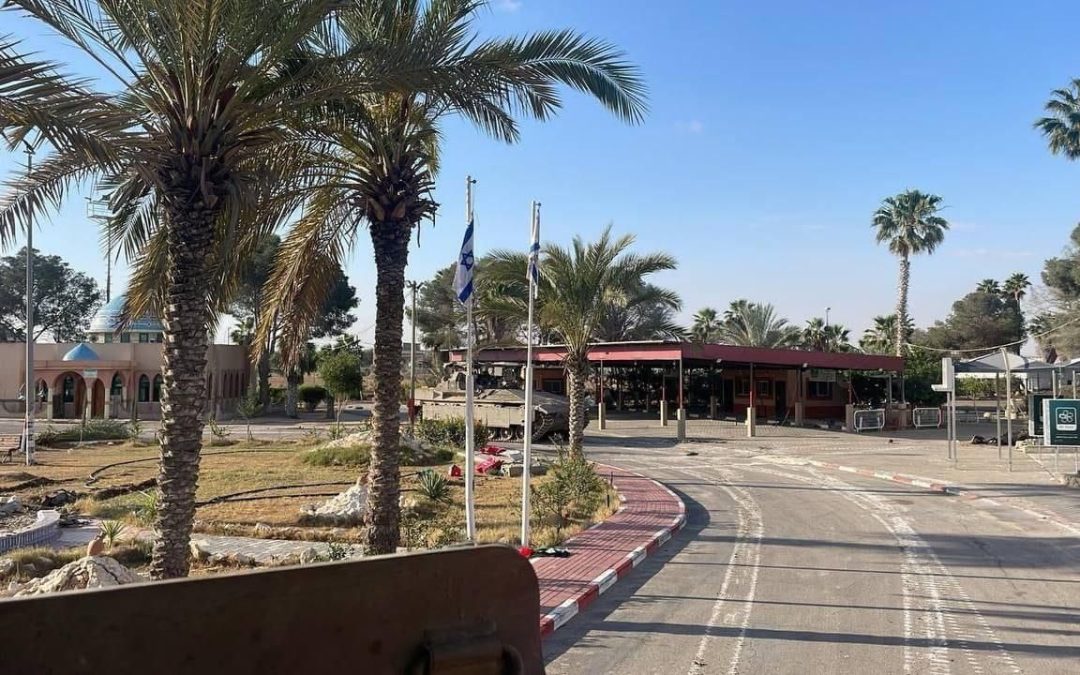
The statement from the National and Islamic forces rejecting all forms of guardianship over the Rafah crossing underscores the importance of Palestinian sovereignty and control over their own borders.
The Rafah crossing, as Gaza’s primary gateway to the outside world, holds significant symbolic and strategic importance for Palestinians. It represents their connection to the outside world and their ability to travel, trade, and interact with the international community without external interference or restrictions.
By rejecting any form of guardianship over the Rafah crossing, the National and Islamic forces assert the principle of Palestinian self-determination and sovereignty over their land, borders, and resources. They reject any attempts by external actors to exert control or influence over Gaza’s borders, whether through direct occupation, blockade, or conditional agreements.
This statement reflects the broader Palestinian aspirations for independence, dignity, and freedom from external interference or domination. It underscores the importance of respecting Palestinian rights and agency in any negotiations or agreements related to border crossings and other key issues affecting their future.
Ultimately, achieving a just and lasting resolution to the Israeli-Palestinian conflict will require addressing the underlying issues of occupation, blockade, and dispossession, and recognizing and upholding the rights and aspirations of the Palestinian people, including their right to control their own borders and determine their own destiny.
The National and Islamic Forces Follow-up Committee announced its rejection of any form of guardianship over the Rafah crossing or any other crossing, considering it a form of occupation.
The Committee explained in a press statement on Wednesday that Palestinian factions have strongly rejected any foreign party controlling the Rafah border of the Gaza Strip, following reports that a US security company will be in charge of the crossing.
The statement stressed that the Follow-up Committee for the National and Islamic Forces, regardless of the veracity of these reports, will not accept the imposition of any form of guardianship over the Rafah crossing or other crossings.
The committee considered this a form of occupation, noting that “any plan of this type and its consequences would be dealt with in the same way as we deal with the occupation.”
The national and Islamic Forces appealed to the Arab League and all Arab and Muslim countries, especially Egypt, to reject any plans or attempts that affect Palestinian-Egyptian sovereignty over the Rafah crossing.
The statement also called on all parties to reject any form of cooperation with such plans, noting that managing the Palestinian internal affairs is a purely Palestinian matter that should be conducted nationally through established and agreed-upon mechanisms.
To read more detailed coverage check out the source of this news: