
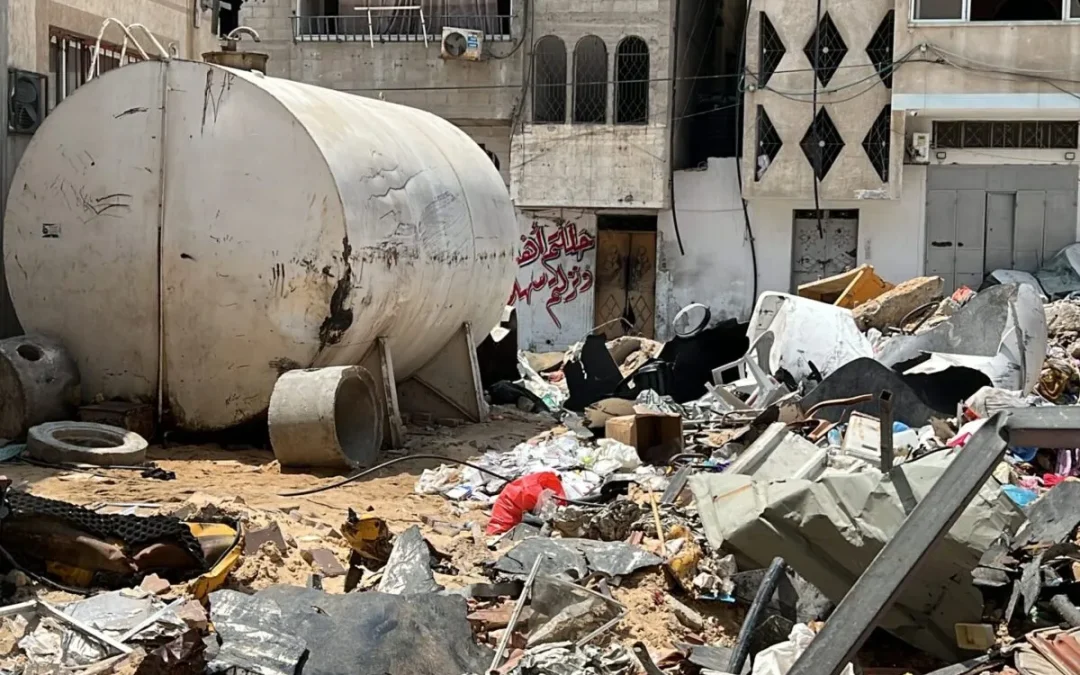
The UN’s assessment that the scale of destruction in Gaza is much greater than in Ukraine highlights the severity of the humanitarian crisis in the Gaza Strip.
The comparison underscores the extensive damage inflicted on Gaza’s infrastructure, including homes, hospitals, schools, and vital public services, during the recent conflict. The widespread destruction has left thousands of Palestinians homeless, displaced, and in urgent need of humanitarian assistance.
Moreover, the comparison with Ukraine serves to draw attention to the disproportionate impact of the conflict on civilian populations, particularly in densely populated urban areas like Gaza. Civilians, including women, children, and the elderly, have borne the brunt of the violence, facing immense hardships and trauma as a result of the destruction and loss of life.
The UN’s assessment underscores the urgent need for a comprehensive humanitarian response to address the immediate needs of those affected by the conflict in Gaza. This includes providing emergency shelter, food, water, medical care, and psychosocial support to displaced families and vulnerable populations.
Furthermore, efforts must be made to facilitate the reconstruction and rehabilitation of Gaza’s infrastructure, in accordance with international humanitarian law and principles of proportionality and distinction. The international community has a responsibility to support these efforts and to work towards a just and lasting resolution to the Israeli-Palestinian conflict, which addresses the root causes of the violence and ensures the rights and dignity of all people in the region.
The UN Mine Action Service (UNMAS) estimated that the amount of debris and rubble in the Gaza Strip stood at 37 million tonnes in mid-April, or 300 kilograms per square metre. It is, said the organisation, much greater than the amount left by Russia’s war on Ukraine.
“Gaza has more rubble than Ukraine, and to put that in perspective, the Ukrainian front line is 600 miles [nearly 1,000 kilometres] long, and Gaza is 25 miles [40 km] long,” explained Mungo Birch, the head of the UNMAS programme in the Palestinian territories. However, the volume of rubble is not the only problem.
“This rubble is likely to be heavily contaminated with UXO [unexploded ordnance], but its clearance will be further complicated by other hazards,” Birch told journalists in Geneva. “There’s estimated to be over 800,000 tonnes of asbestos, for instance, in the Gaza rubble.” The carcinogenic mineral used in construction requires special precautions when being handled.
Birch said that he hopes that UNMAS will eventually be able to act as a coordinating body for clearing mines in Gaza and establish its own teams to dismantle mines and bombs.
UNMAS has secured $5 million but needs a further $40m to continue its work in Gaza over the next 12 months. “The sector as a whole will need hundreds of millions of US dollars over multiple years to make Gaza safe again for the population,” added Birch.
To read more detailed coverage check out the source of this news: