
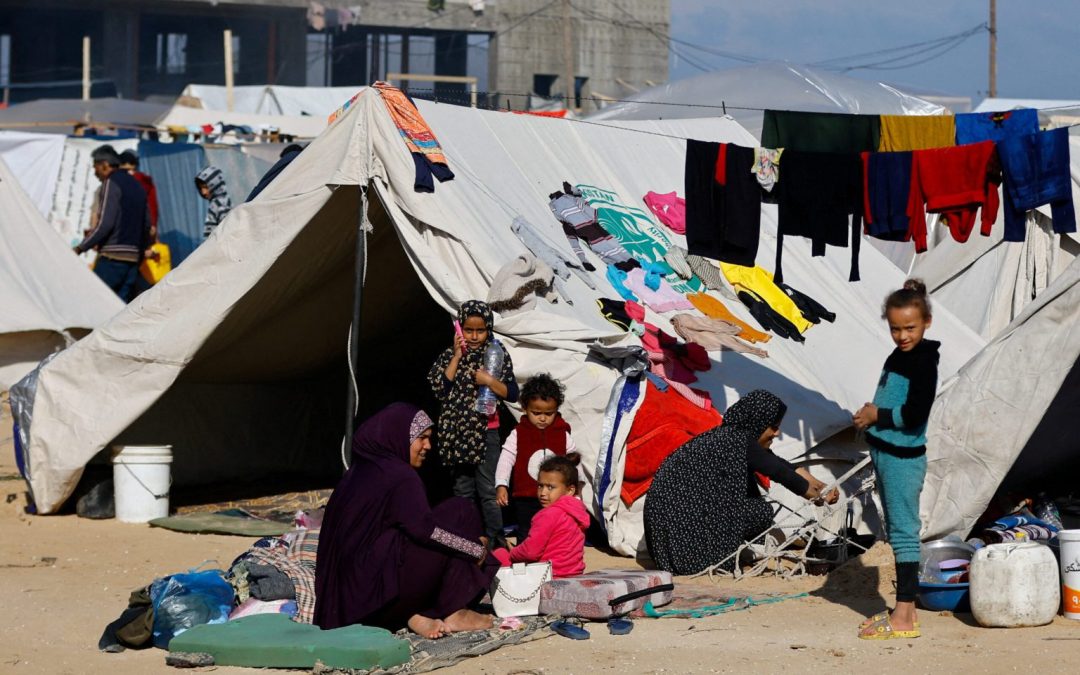
After more than nine months of the Israeli genocidal war, Palestinians in Gaza face numerous forms of suffering that extend beyond killing, displacement, and starvation.
In their daily lives, which have been turned upside down, challenges and problems accumulate, making it increasingly difficult to live in the tents of displacement that have become the hallmark of the current Palestinian catastrophe.
Since the start of the genocide war in Gaza 286 days ago, the Israeli occupation forces have deprived Gaza residents of many basic necessities, food, and various essential items for their daily lives.
Ban on cleaning supplies
The crisis of unavailable cleaning supplies is one of many problems troubling Palestinians, who are accustomed to high levels of personal and household cleanliness. This crisis has opened the door to serious health repercussions.
For weeks, the Israeli occupation forces have prevented the entry of all types of cleaning materials into Gaza, aiming to spread diseases among the population who are already suffering from numerous epidemics and diseases due to repeated displacement, overcrowding, and water shortages.
After hours of wandering through Deir al-Balah market, the largest market in Gaza currently, as the city has become a refuge for hundreds of thousands of residents and displaced people, citizen Suad Abu Atiyeh’s attempts to find soap or shampoo were unsuccessful.
Abu Atiyeh told the Palestinian Information Center (PIC) correspondent that she has been searching for days for shampoo or even soap for washing, but to no avail. Nearly everything in the market has run out, worsening the overall cleanliness situation, which has already deteriorated due to water shortages and the accumulation of waste while living in tents.
She pointed out that the water shortage makes the need for cleaning supplies even greater, especially given the necessity of communal living in tents, shelters, and shared bathrooms.
She confirms that the lack of cleaning supplies and water has led to the spread of many diseases and epidemics.
As a result of the occupation’s bombing of tens of thousands of homes, coupled with Israeli displacement orders, hundreds of thousands of Palestinians live in tattered tents set up in empty spaces in Deir al-Balah and Mawasi Khan Yunis, in UNRWA schools, and in universities that have been turned into shelters, with each classroom now housing several families.
Hundreds of displaced people are forced to use shared bathrooms amid a near-total lack of cleanliness and health standards.
The PIC correspondent observed that the Deir al-Balah market is completely devoid of all types of cleaning supplies.
According to traders, the occupation army has been preventing the entry of cleaning supplies into Gaza for a long time, leading to their depletion from the markets.
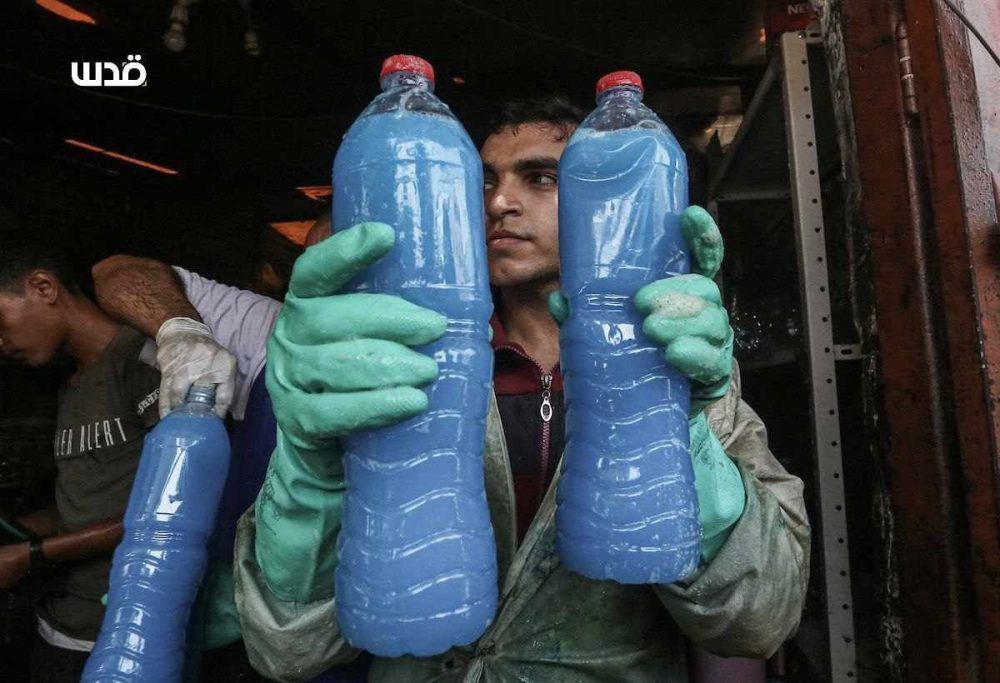
Alternatives
Citizen Muath al-Halabi from Khan Yunis, who lives in a tent, told the PIC c
Diseases and risks
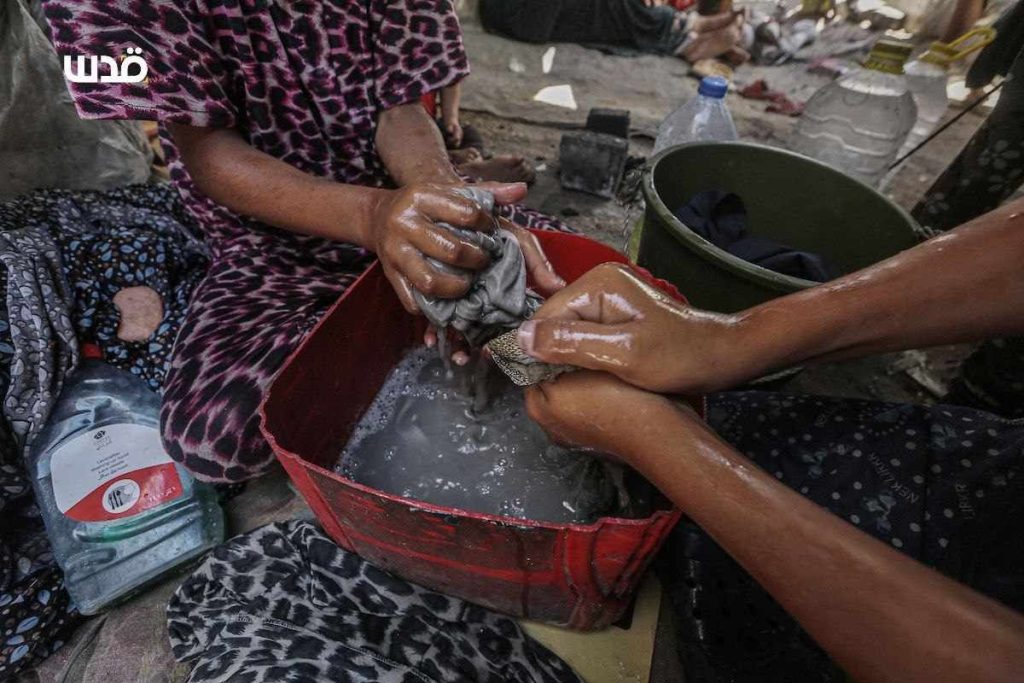
Citizen Maryam Sharab explained that the lack of cleaning supplies is a real problem because they live in an unclean environment. The tents are set up on sand, the temperature inside the tents is high, causing sweating, and the surroundings are unclean due to the inability to remove waste, coupled with water shortages.
Sharab told the PIC that this situation has led to the reappearance of diseases that had been eradicated, pointing to the spread of scabies and head lice, which, if previously present in so
ably spread recently due to water shortages and the difficulty of bathing in shelters, as well as the spread of fungi due to intense heat and high humidity inside the tents.
The ban on the entry of cleaning supplies to Gaza has also impacted the already exhausted and destroyed health sector. Our correspondent observed firsthand at Al-Aqsa Martyrs Hospital and other hospitals that there are no cleaning agents or disinfectants in the various wards, affecting the spread of infections and diseases.
Rationing usage
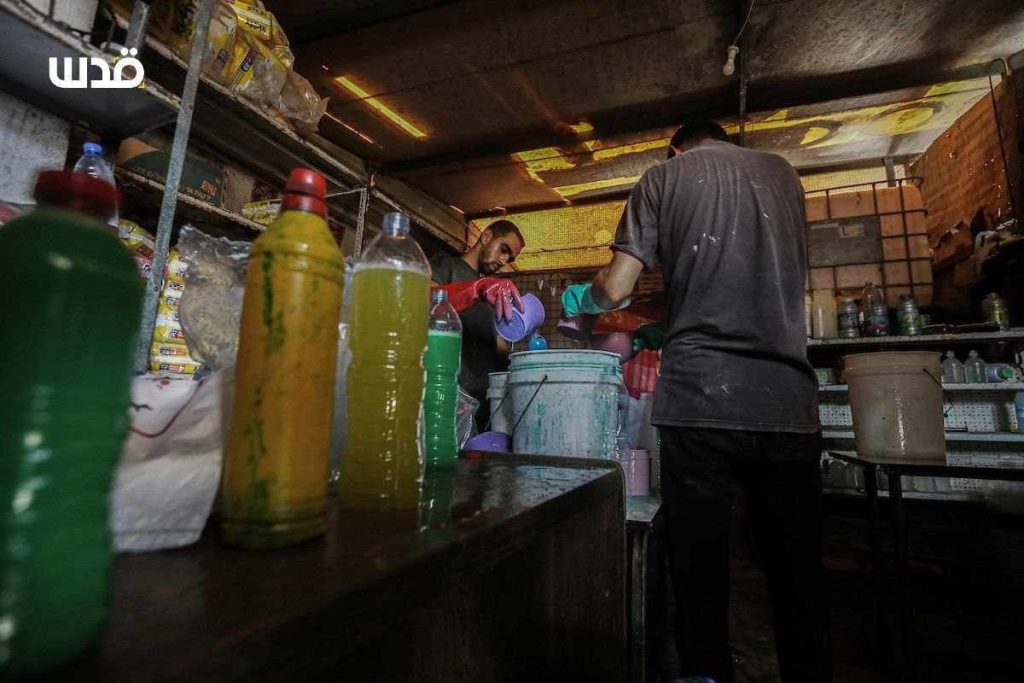
Many citizens have resorted to rationing the use of the cleaning supplies they have to extend their duration, while others have shredded soap bars and mixed them with water to create a liquid for use as shampoo and cleaning fluid.
Local workers in the cleaning supplies industry point out that the lack of raw materials prevents local manufacturing in sufficient quantities.
Gaza residents continue to search for cleaning alternatives, using sand, leaves, and lemon if available, to face the difficult challenges they are enduring.
Legal experts emphasize that Israel’s periodic ban on the entry of cleaning supplies, like many other goods, has no justification and is part of the crime of genocide, aimed at destroying all aspects of Palestinian life and depriving them of the necessary essentials for a dignified life.
Rationing usage
Many citizens have resorted to rationing the use of the cleaning supplies they have to extend their duration, while others have shredded soap bars and mixed them with water to create a liquid for use as shampoo and cleaning fluid.
Local workers in the cleaning supplies industry point out that the lack of raw materials prevents local manufacturing in sufficient quantities.
Gaza residents continue to search for cleaning alternatives, using sand, leaves, and lemon if available, to face the difficult challenges they are enduring.
Legal experts emphasize that Israel’s periodic ban on the entry of cleaning supplies, like many other goods, has no justification and is part of the crime of genocide, aimed at destroying all aspects of Palestinian life and depriving them of the necessary essentials for a dignified life.
To read more detailed coverage check out the source of this news:
https://english.palinfo.com/?p=322228