
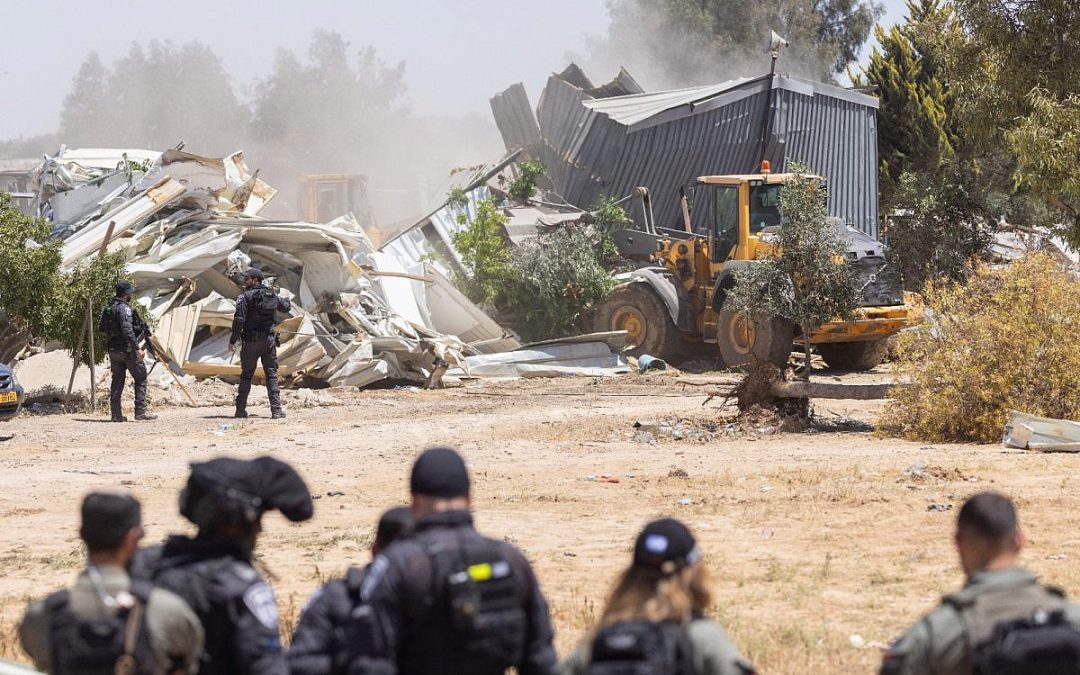
The demolition of Bedouin villages in Israel, including for infrastructure projects like highway expansion, has been a source of controversy and concern both domestically and internationally. Bedouin communities, which are often marginalized and face challenges in terms of land rights and recognition, have historically been disproportionately affected by such demolitions.
In the case of highway expansion, while infrastructure development can bring economic benefits and improve connectivity, the manner in which it is carried out and its impact on local communities are crucial considerations. Critics argue that demolishing entire villages without adequate consultation, compensation, or alternative arrangements for housing and livelihoods can exacerbate existing inequalities and undermine the rights of Bedouin citizens.
From a legal standpoint, the demolition of Bedouin homes and villages often raises questions about property rights, land ownership, and the application of planning and zoning regulations. Bedouin communities frequently face challenges in obtaining formal recognition for their land claims and securing permits for construction, leading to a situation where their homes and structures are deemed illegal and subject to demolition.
Furthermore, these demolitions can have broader implications for issues such as land use, urban planning, and the treatment of minority communities within Israel. They intersect with larger debates about equality, discrimination, and the rights of indigenous peoples.
Efforts to address these concerns have included legal challenges, advocacy campaigns, and calls for greater recognition of Bedouin land rights and participation in decision-making processes related to land use and development. Ultimately, finding solutions that balance the need for infrastructure development with respect for the rights and dignity of Bedouin communities remains a significant challenge in Israel.
To read more detailed coverage check out the source of this news:
https://www.972mag.com/israel-razes-bedouin-village-wadi-al-khalil/